

If you want to transform your saltwater aquarium into a glowing, alien wonderland, look no further than the Toxic Splatter Hammer Coral. Renowned for its electric neon-green coloration and unique speckled patterns, this Large Polyp Stony (LPS) coral is an absolute showstopper in the reef-keeping community.
Whether you are an advanced hobbyist looking to upgrade your collection or a beginner curious about keeping LPS corals, this guide covers everything you need to know about the Toxic Splatter Hammer Coral, including care requirements, placement, and lighting tips.
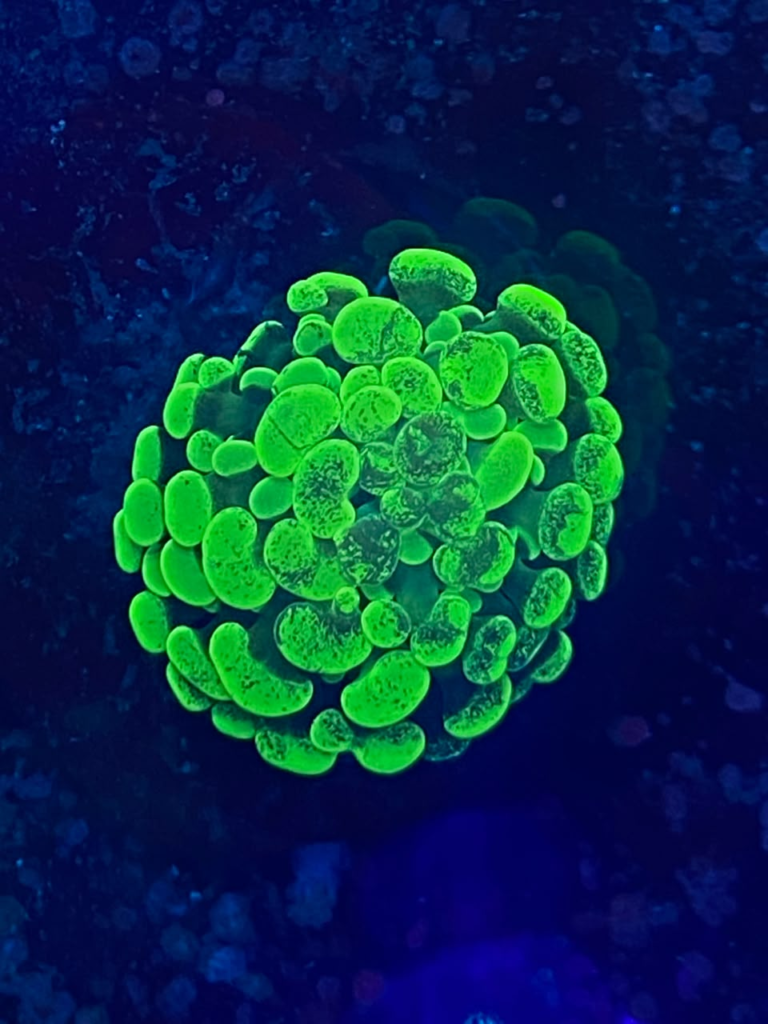
What is a Toxic Splatter Hammer Coral?
The Toxic Splatter Hammer Coral (often falling under the Euphyllia or Fimbriaphyllia genus) gets its name from two distinct features:
- Hammer-Like Tips: The tentacle ends flare out into flat, rounded shapes that look like tiny mallets or hammers.
- The "Splatter" Pattern: Unlike solid green morphs, the Toxic Splatter variant features chaotic, high-contrast flecks, splotches, and metallic highlights across its fleshy polyps—often contrasting neon green with deeper greens, yellows, or purples.
When viewed under actinic or blue LED aquarium lighting, these corals pop with an intense fluorescence that can catch anyone's eye from across the room.
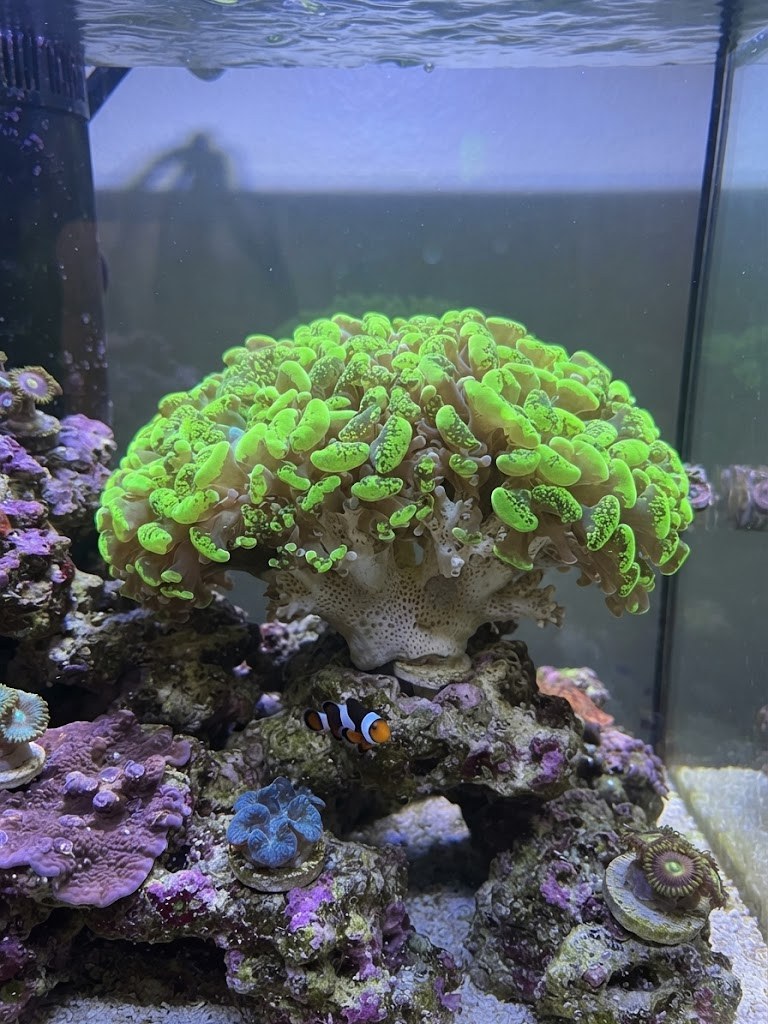
Toxic Splatter Hammer Coral Care Requirements
To keep your hammer coral thriving, expanding fully, and showing off its vibrant colors, you need to replicate its preferred reef conditions. Here are the core parameters:
1. Lighting (Moderate)
Hammer corals do not require blinding metal halides or extreme LED power, but they do need adequate light to maintain their zooxanthellae (symbiotic algae) and bright colors.
- PAR Range: Aim for 100 to 150 PAR.
- Spectrum: They look best and thrive under a balanced blue-heavy spectrum with actinic pop.
2. Water Flow (Medium and Indirect)
Water movement is critical for LPS corals.
- They love gentle, alternating flow that makes their heavy polyps sway gracefully.
- Avoid high, linear, or direct flow, which can tear their delicate flesh against their sharp skeleton and prevent them from fully extending.
3. Water Parameters
Stable water chemistry is the secret to success with any Euphyllia species. Sudden swings can lead to recession or brown jelly disease.
- Salinity: 1.024 – 1.026 SG
- Temperature: 76°F – 78°F (24°C – 26°C)
- pH: 8.1 – 8.4
- Alk/Cal/Mag: Alkalinity (8–9 dKH), Calcium (400–450 ppm), Magnesium (1300–1450 ppm)
- Nutrients: Low to moderate nitrates and phosphates (avoid absolute zero to prevent bleaching).
Placement and Tank Aggression
Before placing your Toxic Splatter Hammer in your display tank, keep its defensive nature in mind.
- Sweeper Tentacles: Hammer corals can deploy long, stinging sweeper tentacles at night to defend their territory against neighboring corals. Give your hammer plenty of personal space (at least 4–6 inches away from other corals).
- Placement Location: Place it on the middle or lower third of your rock scape where it can catch steady light and gentle flow without getting battered by powerheads.
Feeding Your Hammer Coral
While your coral gets a large portion of its energy from photosynthesis via its symbiotic algae, supplemental feeding can boost growth and color intensity.
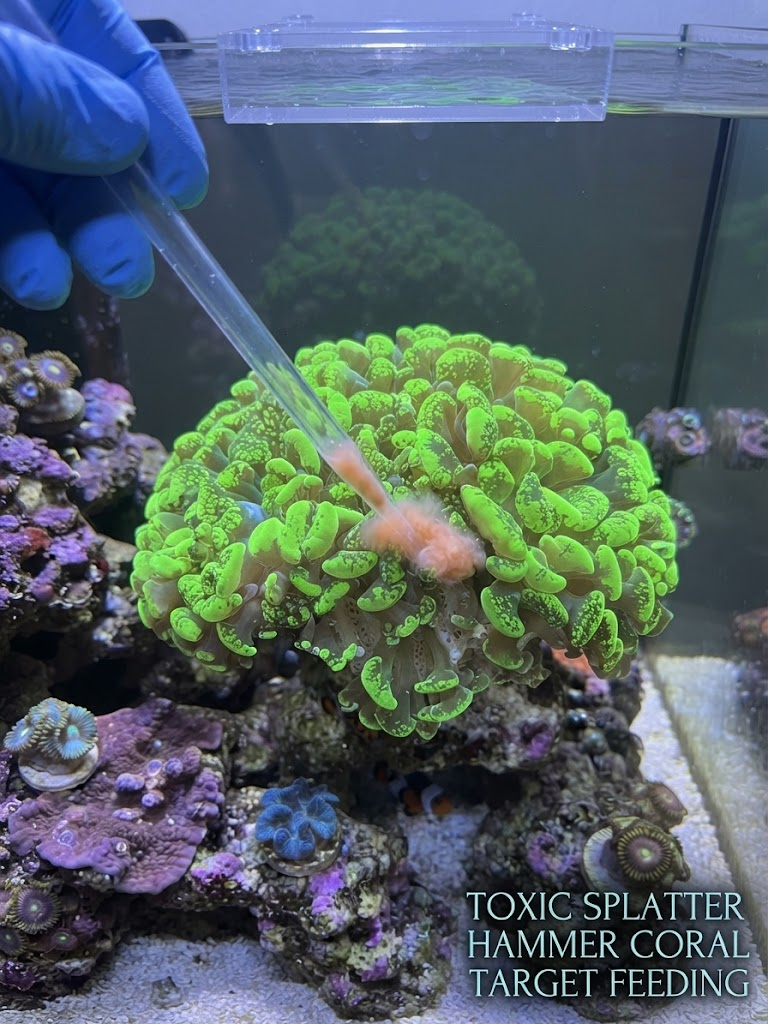
- Target feed them once or twice a week with micro-plankton, mysis shrimp, or specialized coral foods using a pipette or turkey baster while pumps are turned off.
Mastering Your Toxic Splatter Hammer
The Toxic Splatter Hammer Coral is more than just an aquarium inhabitant—it is a living neon masterpiece. By keeping your water parameters stable, providing gentle flow, and offering moderate lighting, you'll be rewarded with a stunning, pulsing centerpiece that steals the show.
