

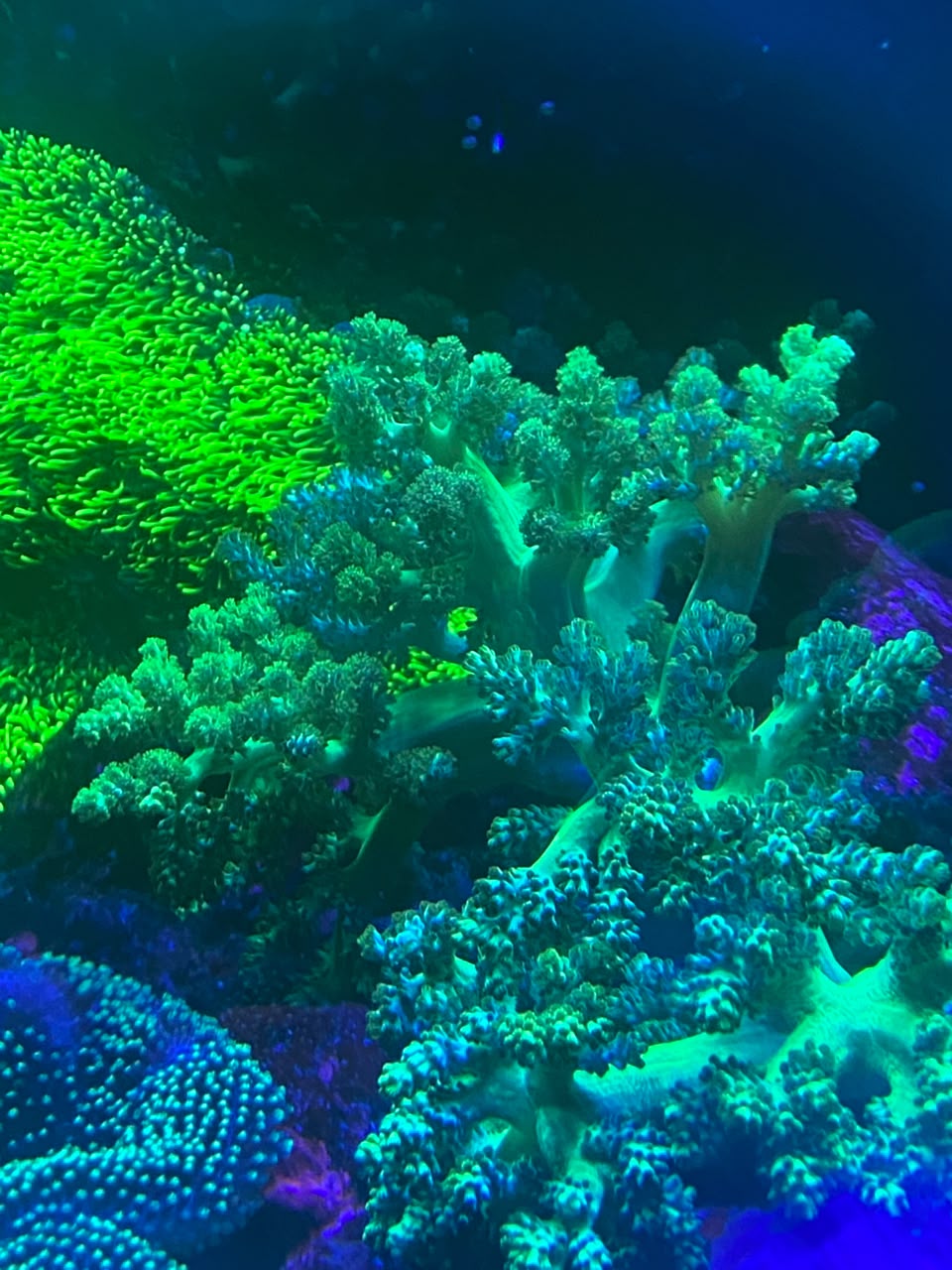
Kenya Tree Coral (Capnella spp.) is one of the hardiest and most rewarding soft corals available to marine aquarium hobbyists. It thrives under low-to-moderate lighting and indirect water flow while exhibiting high tolerance toward minor water parameter shifts. BPK Global Trading provides locally acclimated, aquacultured Kenya Tree Coral frags propagated in the UAE since 2016.
If you are setting up a marine aquarium in Dubai or anywhere across the United Arab Emirates, Kenya Tree Coral (Capnella) is one of the single best soft coral species to introduce into your Aquascape. Famous for its thick trunk, branching structure, and soft, feather-like polyps that sway gracefully with pump currents, this soft coral brings instant motion, depth, and vibrant color to home reef displays.
In this comprehensive care guide, we will cover everything you need to know about keeping Kenya Tree Corals healthy, from ideal water chemistry and lighting requirements to feeding, placement, and effortless home propagation.
Why Kenya Tree Coral Is the Ultimate Beginner Coral
When building a new reef tank, hobbyists frequently face challenges with unstable water chemistry, fluctuating nutrient levels, or light adjustments. Unlike delicate Small Polyp Stony (SPS) corals that demand near-perfect conditions, soft corals like the Kenya Tree possess remarkable natural resilience.
- Exceptional Parameter Tolerance: Kenya Tree Corals adapt quickly to parameter shifts, making them ideal for nano tanks and new aquariums where water stability is still developing.
- Low Technical Demands: They do not require expensive high-PAR light fixtures or delicate calcium and alkalinity dosing regimens.
- Natural Water Quality Indicator: Because Kenya Trees open and close in response to lighting and water flow, observing their behavior gives you immediate visual feedback on your aquarium’s health.
- Effortless Propagation: As the coral grows, it naturally drops small branches that quickly attach to nearby rockwork, allowing you to grow a flourishing soft coral forest without complex tools.
Optimal Tank Parameters for Kenya Tree Coral
To ensure your Capnella coral exhibits full polyp expansion and healthy growth, maintain your aquarium within these standard parameters:
| Parameter | Recommended Range |
| Water Temperature | 24°C – 26°C (75°F – 78°F) |
| Salinity / Specific Gravity | 1.024 – 1.026 SG |
| pH | 8.1 – 8.4 |
| Nitrate ($NO_3$) | 5 – 15 ppm |
| Phosphate ($PO_4$) | 0.03 – 0.1 ppm |
| Alkalinity (dKH) | 8 – 11 dKH |
Placement, Lighting, and Water Flow Needs
1. Lighting Requirements
Kenya Tree Corals rely primarily on symbiotic Zooxanthellae algae within their tissues to produce energy through photosynthesis. They prefer low to moderate light levels (PAR 70–150). Placing your Kenya Tree in the lower to middle section of your rock work provides plenty of light without risking tissue bleaching caused by intense LED illumination.
2. Water Flow Preferences
Provide moderate, indirect water flow. A gentle, random current carries microscopic food particles to the polyps while flushing away trapped detritus and organic waste. Avoid pointing power heads or Wave makers directly at the coral stem, as blast-level flow can cause the coral to remain tightly closed.
3. Tank Placement Considerations
Give your Kenya Tree Coral ample breathing room on your Aquascape. When fully expanded during daytime lighting hours, a mature specimen will swell up to double its retracted size. Keep adequate distance between Kenya Trees and aggressive stinging corals like Euphyllia (Hammer or Torch corals).
To learn more about scientific soft coral taxonomies and biology, explore octocorallia species data on Wikipedia.
Understanding Shedding and Natural Behavior
One common concern for new Reefkeepers occurs when a Kenya Tree Coral suddenly droops, closes its polyps, and develops a shiny, waxy outer film across its branches.
Do not panic! This behavior is a completely natural cleaning mechanism known as shedding. Soft corals routinely produce a thin mucous layer to trap micro-algae, dust, and organic debris. After a day or two, the coral will slough off this skin layer in the water current, revealing cleaner, larger, and brighter polyps underneath.
Feeding and Care Tips
While Kenya Trees generate most of their nutrition through light, they also absorb dissolved organic compounds directly from the water column. You do not need to target-feed individual polyps, but occasionally broadcasting fine phytoplankton, amino acids, or micro-plankton foods into the water column will noticeably boost growth rates and color intensity.
Frequently Asked Questions
- Why is my Kenya Tree Coral drooping or slumped over?Kenya Trees often slump when adjusting to a new tank, during shedding cycles, or if water flow is too low. Ensure gentle, indirect water movement around the base to help the trunk stay inflated and erect.
- Is Kenya Tree Coral easy to propagate (frag)?Yes! It is one of the easiest corals to frag in the hobby. Simply cut a small branch with sharp, sterile scissors and secure it to a frag plug or rock rubble using a rubber band, mesh netting, or reef-safe gel glue.
- Do Kenya Tree Corals sting other corals?No, Kenya Trees are peaceful soft corals that lack aggressive stinging tentacles (sweepers). However, their rapid growth rate means they can shade neighboring low-light corals if left unpruned.
Build Your Reef with BPK
Whether you are starting your first nano tank in Dubai or adding hardy, low-maintenance livestock to a mature setup, choosing locally acclimated, Aquacultured livestock ensures the highest chance of long-term success.
Explore our wide collection of healthy aquaculture frags at BPK.ae, or contact our team today for tailored advice on stocking your marine aquarium!
