

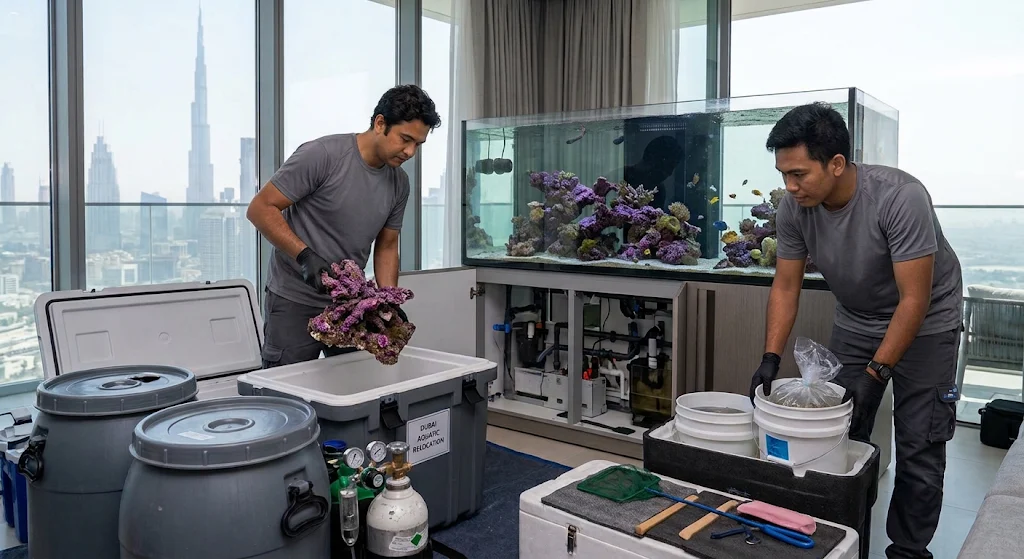
Relocating a mature marine aquarium across Dubai, Abu Dhabi, or the Northern Emirates is one of the highest-risk logistical operations in luxury home management. Unlike standard household furniture, a thriving reef tank is a closed, living biological reactor containing thousands of dirhams in delicate SPS/LPS corals, sensitive marine fish, and established nitrifying bacteria. Executing an aquarium relocation in the UAE without a strict biological and thermal protocol inevitably leads to toxic hydrogen sulfide spikes, equipment failure, and total livestock wipeouts.
High ambient temperatures in the Emirates mean transit thermal stability and exact water chemistry management are non-negotiable. Whether you are transferring a custom villa centerpiece to a new residence or decommissioning an executive office display, a successful aquarium relocation in the UAE requires clinical preparation, controlled teardown sequences, and formal service protections.
To ensure your re-installed tank runs at peak efficiency once moved, coordinate your relocation timeline with our Custom Reef Life Support System Design Guide, our Dubai Aquarium Chiller Sizing Guide, and our Marine Aquarium Maintenance Pricing in Dubai Guide.
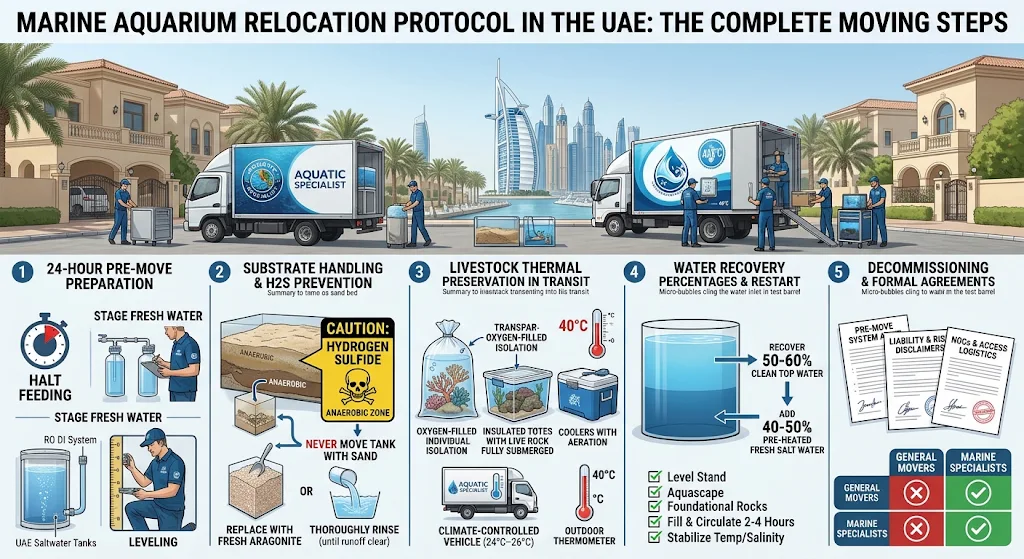
1. The 24-Hour Pre-Move Preparation Phase
A smooth aquarium relocation in the UAE is won or lost before a single drop of water is drained. Rushing teardown on moving day stirs up trapped detritus and stresses fish unnecessarily.
Mandatory 24-Hour Pre-Move Checklist
- Halt Feeding 24–36 Hours Prior: Stop feeding all marine fish and corals at least 24 hours before teardown. Fasting clears fish digestive tracts, preventing ammonia spikes inside sealed transport bags or aerated holding bins.
- Stage Fresh RO/DI Saltwater at Destination: Prepare and heat at least 40% to 50% of the total system volume in fresh, parameter-matched saltwater at the destination property 24 hours in advance. Confirm that salinity (1.025–1.026 SG), alkalinity, and temperature (25°C) match the origin tank.
- Verify Floor Level & Structural Load: Confirm that the destination floor is completely level and structurally rated to handle the static weight (roughly 1.2 kg per liter including glass, rock, and sump) before moving day begins.
- Prepare Activated Carbon & Chemical Filtration: Stage fresh ROX 0.8 activated carbon and poly-filters to strip coral stress toxins (terpenes and mucopolysaccharides) immediately upon system restart.
For pure makeup water standards prior to move day, review our RO DI System UAE Saltwater Tanks Guide.
2. Live Sand Handling: Preventing Toxic Hydrogen Sulfide Release
Improper substrate handling is the number one cause of post-move tank crashes during an aquarium relocation in the UAE. Deep or mature sand beds harbor anaerobic zones rich in trapped organic waste, nitrates, and hydrogen sulfide gas (H2S)—a compound lethal to fish and invertebrates even in trace amounts.
Safe Substrate Protocols
- Never Move a Tank with Sand Inside: Even a 3 cm layer of wet sand adds massive shear stress to bottom glass panels and silicone seams during lifting, risking catastrophic seam failure.
- Do Not Scoop and Dump Old Sand: Transferring unwashed old sand directly into the re-installed tank releases trapped hydrogen sulfide and triggers severe ammonia spikes.
- Rinse or Replace: Either replace the substrate entirely with new, pre-rinsed dry aragonite sand (seeding it with a single cup of clean top-layer sand from the old tank), or thoroughly rinse the old sand in buckets using clean saltwater until all silt and organic sludge are flushed clear.
3. Live Rock & Coral Thermal Preservation in Transit
In the UAE, outdoor loading bays and non-acclimated moving trucks can exceed 40°C within minutes. A professional aquarium relocation in the UAE treats transit as a mobile life-support operation.
Transit Preservation Standards
- Climate-Controlled Transport Vehicles: All livestock, live rock, and glass display panels must travel inside air-conditioned vehicles maintained between 24°C and 26°C.
- Submerged Live Rock Bio-Preservation: Nitrifying bacteria colonizing live rock begin dying off if exposed to dry air or temperature shocks. Transport live rock fully submerged in original tank water inside heavy-duty, lidded food-grade totes.
- Individual Coral Isolation: Bag branching SPS and delicate LPS corals individually using thick, double-lined marine bags filled with oxygen-enriched water. Keep aggressive or toxin-releasing soft corals (such as Zoanthids or Sinularia) isolated from sensitive stony corals.
- Battery-Operated Aeration for Fish: House marine fish in insulated coolers outfitted with battery-powered air pumps and airline tubing to maintain dissolved oxygen levels and stable temperatures throughout transit.
4. Water Recovery Percentages & System Restart Sequence
Trying to save 100% of old aquarium water is counterproductive and risky. Once you begin lifting rockwork, settled detritus suspends into the lower water column, spiking phosphates and dissolved organics.
Optimal Water Split Ratio
- 50% to 60% Clean Original Water Recovered: Siphoned from the upper water column before touching any rocks or sand. Used for livestock transport and initial refill to preserve familiar trace chemistry and minimize osmotic shock.
- 40% to 50% Freshly Mixed Saltwater: Prepared ahead of time at the new site to replace discarded bottom water and dilute any trace ammonia released during the move.
Post-Move Restart Sequence
- Level the stand and display tank using precision spirit levels and composite shims.
- Place foundational aquascape rocks directly onto the bottom glass (or protective starboard) before adding sand around the base to prevent rockslides.
- Fill the system with recovered original water and top off with pre-heated fresh saltwater.
- Engage return pumps, protein skimmers, heaters/chillers, and fresh activated carbon reactors. Allow the system to circulate and clear for 2 to 4 hours until temperature and salinity stabilize.
- Drip-acclimate corals first, followed by fish, keeping aquarium lights dimmed for the first 24 hours to minimize photo-shock.
For older systems undergoing relocation, inspect pumps, chiller coils, and UV bulbs during teardown using our Equipment Audit Guide before re-installing worn hardware.
5. Decommissioning Protocol & Formal Service Agreements
Whether you are permanently decommissioning a display or hiring specialists for a full aquarium relocation in the UAE, clear documentation protects both the property owner and the technical team. Standard general movers lack marine biology training and carry zero liability for livestock mortality or saltwater water damage.
Essential Elements of a Formal Relocation Scope
- Pre-Move System Audit & Inventory: A documented list of all livestock species, coral colonies, hardware serial numbers, and pre-existing glass scratches or seal wear.
- Building Management NOCs & Access Logistics: Clear assignment of responsibility for Emaar, Nakheel, or DIFC tower move-in/move-out permits, service elevator bookings, and floor protection.
- Liability & Risk Boundaries: Explicit terms covering plumbing leak warranties at the new site, emergency backup aeration, and realistic biological disclaimers regarding ultra-sensitive SPS corals or aged fish during transit.
- Decommissioning Disposal & Buyback Terms: For tank decommissioning, a signed scope detailing livestock rehoming/quarantine transfer, safe saltwater drainage, glass removal, and equipment buyback or disposal.
Summary Relocation Matrix: DIY / General Movers vs. Marine Specialists
| Relocation Factor | General Moving Company | Specialized Marine Relocation Protocol |
| Sand Bed Handling | Leaves wet sand inside tank or dumps it unwashed into buckets. | Discards old anaerobic substrate or flushes clean with saltwater to prevent H2S toxicity. |
| Transit Environment | Uncooled cargo trucks exposed to UAE heat. | Climate-controlled vehicles (24°C–26°C) with oxygenated bags and battery aeration. |
| Water Management | Discards all water or reuses dirty bottom sludge. | Recovers 50–60% clean top water paired with 40–50% pre-heated fresh saltwater. |
| Plumbing & Re-Setup | Leaves plumbing disconnected or over-tightens bulkheads. | Full hydraulic re-assembly, leak testing, parameter stabilization, and drip acclimation. |
| Contractual Protection | Standard furniture waiver; zero coverage for reef systems. | Itemized scope of work, pre-move hardware audit, and documented handover parameters. |
Executing an aquarium relocation in the UAE with disciplined 24-hour preparation, strict substrate sanitation, and climate-controlled logistics ensures your marine ecosystem transitions seamlessly into its new home without biological setbacks.
