

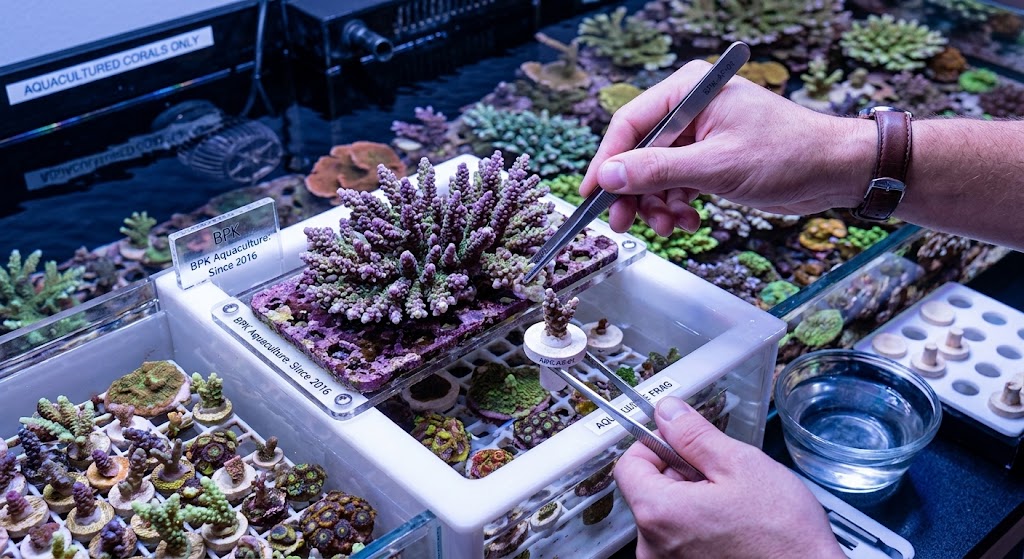
Quick answer: Aquaculture frags are coral fragments cut from colonies grown in aquariums, not collected from reefs. They are more sustainable, hardier in captivity and easier to trace than wild-collected corals. BPK Global Trading has propagated corals in the UAE since 2016 and supplies aquaculture frags through BPK.ae.
If you keep a reef tank in the UAE today, you have more choice than ever. Walk into a good aquarium store or browse online and you will find shelves and frag racks filled with corals in every colour imaginable. Behind much of that choice sits a quiet revolution: aquaculture frags, small pieces of coral grown, cut and propagated entirely in captivity.
At BPK, this is not a trend we jumped on. We began propagating corals in the UAE in 2016, years before many of today's shops opened their doors. In this article we want to explain what aquaculture frags are, why they matter, and how to choose them with confidence.
What Are Aquaculture Frags?
A frag is a small fragment of a coral colony. When a healthy colony is carefully cut, each piece can be mounted on a plug or disc and grown on into a full colony of its own. Aquaculture frags are frags that come from corals grown under controlled conditions in an aquarium system, not taken from the wild.
Each generation is cut from parent colonies that are already living in captivity. The coral never needs to be harvested from a natural reef, and the same parent colony can keep producing new frags for years. That is the basic idea behind coral aquaculture: one colony, many offspring, no further pressure on the ocean.
You may also see these corals described as aquacultured corals, captive-propagated corals, captive-grown corals or tank-raised corals. They all point to the same thing, a coral raised in an aquarium rather than collected from a reef.
Why BPK Started Growing Corals in 2016
When we started, coral aquaculture in the UAE was still a young idea. Most hobbyists were buying wild-collected stock that had travelled a long way, and results were often inconsistent. We believed the region could do better. A local, controlled, quarantined supply of coral frags would mean healthier livestock, shorter journeys and a more responsible hobby.
That belief has shaped our work ever since. We were growing and propagating corals in the UAE before many of today's retailers existed, and we have spent the years since refining our husbandry, our systems and our handling protocols. Experience matters in this field, because corals do not forgive shortcuts. Stable water chemistry, consistent lighting and careful observation are what turn a small cutting into a thriving colony.
Why Are Aquaculture Frags Better Than Wild-Collected Corals?
1. They are more sustainable
Wild collection takes corals from reefs that are already under pressure from warming seas, pollution and coastal development. Aquaculture frags break that chain. Every frag you buy from a captive-grown colony is one less coral taken from nature. For hobbyists who love reefs, that is the most important reason to choose them.
2. They are hardier in your tank
Corals grown in aquariums are already adapted to life in a glass box. They are used to captive lighting, aquarium water parameters, prepared foods and the flow of a pump-driven system. Wild corals, by contrast, must adjust to all of this after a stressful collection and shipping process. That adjustment period is where many losses happen. Aquaculture frags start the journey a step ahead.
3. They are healthier and easier to trust
Because aquaculture frags are grown in a controlled system, they can be observed closely over time. Growers see how each coral behaves, how it feeds, how it grows and how it responds to change. Problems can be spotted early and managed before they reach a customer's tank. A coral with a known history is always a safer purchase than one with an unknown past.
4. They travel a shorter distance
A frag grown in the UAE does not need to survive days of international transit. Shorter travel means less stress, less shock and a better chance of settling in quickly. For reefkeepers in Dubai, Abu Dhabi and across the Emirates, local supply is a real advantage.
5. They offer consistent quality and colour
Captive propagation lets growers select and maintain strong colour forms over time. When you buy an aquaculture frag, you are often getting a coral from a line that has already proven itself in the aquarium, with growth and colour you can rely on.
6. They are good value
Because a single colony can yield many frags, propagation makes beautiful corals more accessible. Beginners can start a reef with hardy, affordable pieces, while experienced collectors can build a collection one frag at a time.
Aquaculture Frags vs Wild-Collected Corals
| Factor | Aquaculture frags | Wild-collected corals |
| Source | Cut from colonies grown in aquariums | Taken from natural reefs |
| Impact on reefs | No further collection needed | Removes coral from the reef |
| Aquarium adaptation | Already used to captive conditions | Must adjust after collection |
| Transit to the UAE | Short when grown locally | Often long international shipping |
| Traceability | Known parent colony and history | History often unknown |
How Are Aquaculture Frags Grown?
The process looks simple from the outside, but each step needs care.
Selecting parent colonies. Growers choose healthy, fast-growing, well-coloured colonies. Strong parents lead to strong frags.
Cutting and mounting. Using clean tools, a section of the colony is cut and fixed to a plug or frag disc. Cuts are made with attention to the coral's structure so that the parent colony recovers well too.
Healing and recovery. Fresh frags are placed in a low-stress part of the system while they heal. Stable conditions at this stage are essential.
Growth and encrusting. Over weeks and months, the frag grows tissue over the plug and begins to form a new colony. Light, flow, nutrition and water quality all play a part.
Quality control and quarantine. Before a frag is offered to the public, it should be healthy, fully encrusted or clearly recovering, and free from pests. Strict quarantine and conditioning practices protect both the coral and the customer's existing reef.
This is the discipline that comes with years in the field. A good frag is not just a piece of coral on a plug. It is the result of a well-run system and a patient grower.
How Do You Choose Healthy Aquaculture Frags?
Not every frag is equal, even among aquacultured corals. Here is what we suggest every reefkeeper checks.
- Full tissue and good polyp extension. Healthy frags show tissue that covers the skeleton and polyps that open normally once the coral is settled.
- Even colour. Washed-out or patchy colour can signal stress.
- Clean plug and base. Look for tidy mounting and no signs of pests, algae overgrowth or unwanted hitchhikers.
- A transparent source. Ask where the coral was grown and how it was handled. A trustworthy supplier is happy to answer.
- Suitable for your tank. Match the coral to your lighting, flow and experience. Beginner-friendly species forgive mistakes. Sensitive species do not.
How Do You Acclimate Aquaculture Frags?
Even the hardiest aquaculture frags need a gentle introduction to your system.
- Float and drip acclimate. Match temperature and slowly bring the frag's water closer to your tank's water.
- Dip if recommended. A coral dip before placement helps protect your reef from pests.
- Start low on the light. Place the frag lower in the tank or under reduced light for the first days, then raise it gradually.
- Choose the right spot. Give it space to grow and avoid direct, strong flow at first.
- Watch closely. Check tissue and polyp extension daily for the first week.
Small habits like these are often the difference between a frag that merely survives and one that grows into a showpiece colony.
Aquaculture Frags and the Future of Reefkeeping in the UAE
The UAE reefkeeping community is growing fast. More hobbyists, more public aquariums and more luxury installations mean more demand for healthy corals. If that demand is met with wild collection, the cost is paid by real reefs. If it is met with aquaculture frags, the hobby can grow without harming the ocean.
This is why we believe local coral aquaculture is so important, and why we have stayed committed to it since 2016. Every frag grown here is a small statement that beautiful
reefs in our homes do not need to come at the expense of reefs in the sea.
Frequently Asked Questions
Are aquaculture frags the same as wild corals? No. Aquaculture frags are cut from colonies that are grown in aquariums. They are not collected from the wild.
Are aquaculture frags easier to keep? Generally, yes. Because they are already adapted to captive conditions, they tend to settle faster than freshly collected corals. Care still matters, so match each coral to your tank.
Can I start a reef with only aquaculture frags? Absolutely. Many reefkeepers build entire tanks from aquacultured corals, from soft corals and mushrooms to LPS and SPS.
Where can I buy aquaculture frags in Dubai? BPK Global Trading supplies aquaculture frags in the UAE, backed by experience that goes back to 2016. Visit BPK.ae or contact our team to ask what is available.
What does aquaculture mean for corals? Coral aquaculture means growing corals in controlled aquarium systems and propagating them by fragmenting parent colonies. Aquaculture frags are the pieces produced this way.
Are aquaculture frags sustainable? Yes. Each frag comes from a captive-grown colony, so no new coral has to be taken from a natural reef.
How long has BPK been growing corals in the UAE? BPK has propagated corals in the UAE since 2016.
How do I know a frag is truly aquacultured? Ask the seller where the parent colony was grown and how the frag was handled. A trustworthy supplier can tell you.
Grow Your Reef with BPK
Whether you are setting up your first nano tank or expanding a mature reef, aquaculture frags are the smartest, most sustainable way to build the reef you imagine. As pioneers of coral aquaculture in the UAE, we are proud to have helped shape the local reefkeeping scene, and we are just as excited about what comes next.
Explore our range of aquaculture frags at BPK.ae, or get in touch with our team for advice on choosing the right corals for your system.
