

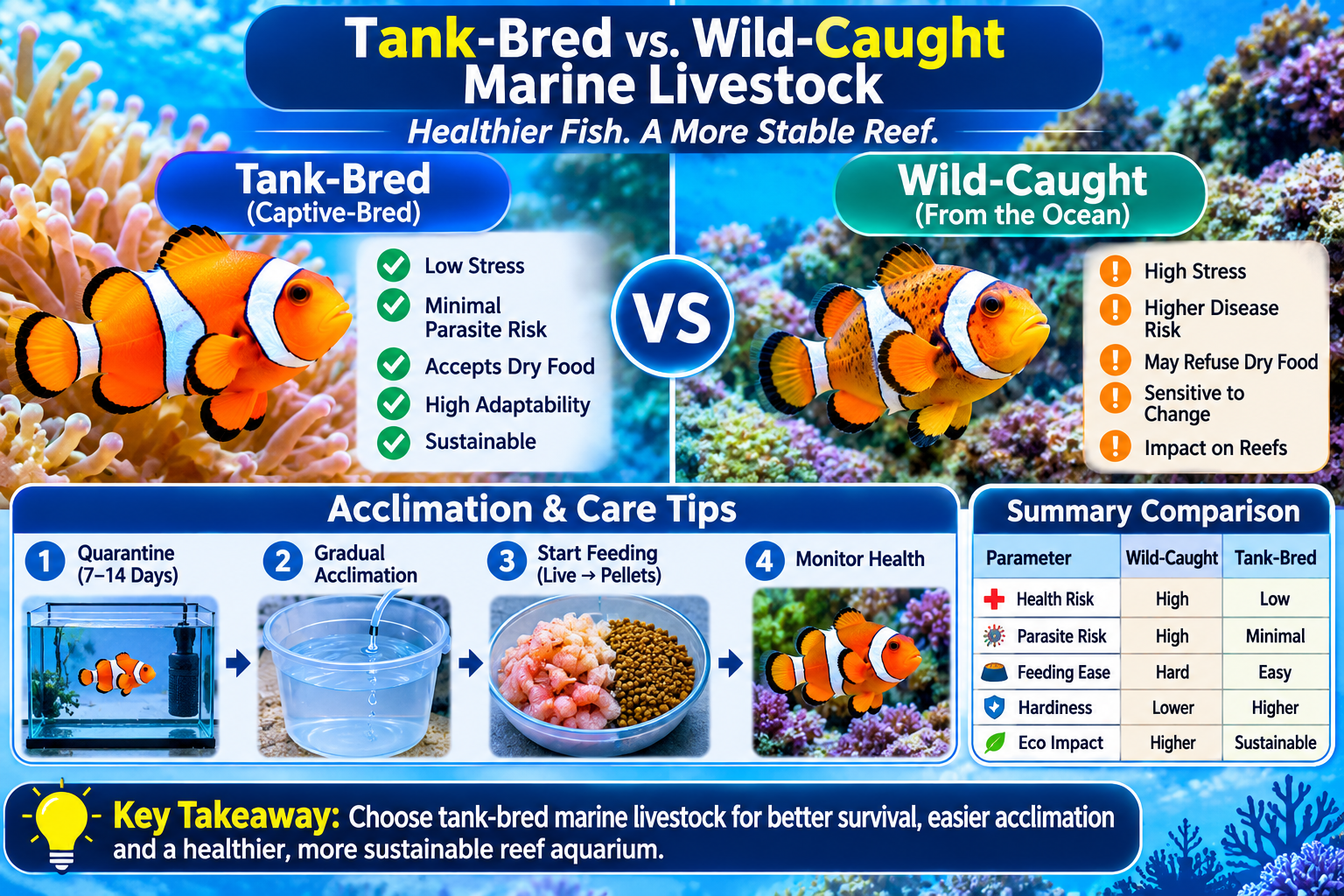
Stocking a newly established or mature marine reef aquarium in the UAE involves a critical ethical and biological decision: selecting between captive-bred specimens and wild-collected marine life. While wild-caught specimens often display stunning, hyper-natural color variations and rare regional morphs, they frequently arrive in the hobby carrying severe transport fatigue, high internal parasite loads, and acute dietary refusal behaviors. Conversely, evaluating tank-bred vs wild-caught marine livestock reveals that captive-bred alternatives offer superior genetic adaptability to aquarium life.
Understanding the physiological differences in tank-bred vs wild-caught marine livestock is essential to keeping mortality rates under 5% during the first critical 14 days post-introduction. In high-salinity, warm-water environments like Dubai, where temperature fluctuations can accelerate bacterial proliferation, choosing hardy specimens when comparing tank-bred vs wild-caught marine livestock protects both your biological investment and your display stability.
Before introducing new specimens into your main DT (Display Tank), ensure your quarantine protocols align with our Quarantine Marine Fish Dubai Protocol and our Custom Reef Life Support System Design Guide.
1. Metabolic Exhaustion and the Transit Shipping Chain
The journey from a shallow reef or aquaculture facility to a residential glass display in the UAE spans thousands of kilometers and multiple transit hubs. The biological toll exacted during this journey dictates initial survival rates when assessing tank-bred vs wild-caught marine livestock.
The Transit Timeline Breakdown
- Wild-Caught Supply Chain (48–120 Hours): Captured via barrier nets or cyanide collection (in unregulated regions), held in rustic local holding bins, packed into regional export bags, flown through international hubs, and finally trucked to local fish stores. By arrival, wild specimens in the debate of tank-bred vs wild-caught marine livestock have endured multiple hypoxic events, fluctuating temperatures, and severe metabolic exhaustion.
- Tank-Bred Supply Chain (12–24 Hours): Sourced directly from commercial aquaculture facilities or local breeders, bagged with pure oxygen, and transported rapidly with minimal handling. Their cortisol (stress hormone) baselines remain remarkably low.
When fish undergo prolonged shipping stress, their hepatic glycogen reserves become entirely depleted. Upon introduction to a new display, wild specimens often lack the metabolic stamina to fend off territorial harassment from established tank inhabitants, whereas captive-bred options in the context of tank-bred vs wild-caught marine livestock readily defend territory and feed within hours.
2. Parasite Prevalence: Cryptocirritans, Amyloodinium, and Flukes
The most dramatic divergence when analyzing tank-bred vs wild-caught marine livestock lies in pathogen exposure. Wild environments teem with opportunistic protozoan parasites and metazoan worms.
Pathogenic Risk Comparison
- Wild-Caught Specimens (High Risk): Routinely carry dormant or active strains of Cryptocaryon irritans (marine white spot), Amyloodinium ocellatum (coral fish disease / velvet), internal intestinal flagellates, and monogenean gill flukes. A single unquarantined wild fish can wipe out an entire established display within 72 hours.
- Tank-Bred Specimens (Low Risk): Hatched and raised in sterile or biosecure closed-loop aquaculture systems utilizing filtered seawater or synthetic mixes. They are fundamentally free from wild parasites, though cross-contamination can occur if housed in mixed retail holding systems.
Even when purchasing captive-bred livestock, strict prophylactic observation and targeted freshwater dips or copper treatment regimens remain a cornerstone of professional reef husbandry. For water purification standards required during sensitive treatment protocols, reference our RO DI System UAE Saltwater Tanks Guide.
3. Feeding Transition Timelines: From Live Prey to Dry Pellets
Nutritional acclimation represents the highest barrier to long-term survival for newly acquired marine specimens.
Dietary Acceptance Matrix
- Wild-Caught Feeding Habits: Imprinted entirely on natural benthic fauna, copepods, amphipods, or live mysis shrimp. When presented with dry commercial pellets or flake food, wild specimens frequently ignore them entirely, starving themselves over a 5-to-7-day window.
- Tank-Bred Feeding Habits: Conditioned from the larval settlement stage to accept manufactured feeds, powdered fry diets, and high-protein sinking pellets.
Recommended Nutritional Transition Protocol
- Days 1–3 (Appetite Stimulation): Offer live adult Artemia (brine shrimp) or frozen mysis soaked in garlic extract and amino-acid enrichments to trigger a feeding response.
- Days 4–7 (Blended Weaning): Slowly mix micro-pellets and high-protein flakes into thawed frozen foods so fish ingest dry formulas accidentally.
- Days 8+ (Complete Transition): Shift fully to automated pellet ring feeders while maintaining bi-weekly frozen food rotations to preserve coloration and immune health.
4. Genetic Resilience and the Rise of Designer Captive-Bred Morphs
Beyond disease resistance, modern aquaculture has transformed ornamental marine species through selective breeding. Designer clownfish (Amphiprion ocellaris and percula varieties such as Picasso, Snowflake, and Platinum) demonstrate remarkable genetic hardiness compared to their wild counterparts.
Advantages of Captive-Bred Genetic Lines
- Environmental Tolerance: Tank-bred strains display broader tolerance ranges for minor alkalinity shifts, nitrate accumulation, and temperature swings common during seasonal AC maintenance cycles in the UAE.
- Acoustic and Visual Desensitization: Raised in proximity to human activity, pumps, and automated lighting ramps, captive-bred fish are significantly less prone to fatal glass-jumping panic responses when room lights switch off suddenly.
- Sustainable Conservation: Selecting aquaculture stock actively relieves destructive ecological pressure on fragile wild coral reef ecosystems across the Indo-Pacific.
Summary Comparison Matrix: Tank-Bred vs. Wild-Caught Livestock
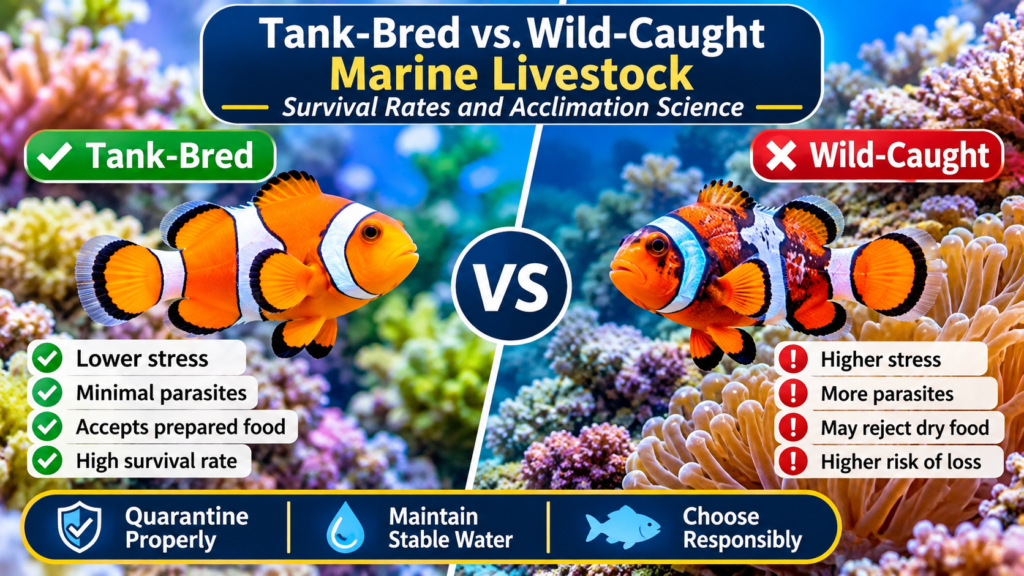
| Evaluation Parameter | Wild-Caught Marine Livestock | Tank-Bred Marine Livestock |
|---|---|---|
| Initial Stress Levels | Extreme (multi-day transit, multiple intermediary holding tanks) | Low (direct hatchery-to-supplier transport chain) |
| Parasite Risk | High (Cryptocaryon, Amyloodinium, flukes, intestinal worms) | Minimal (pathogen-free closed aquaculture origin) |
| Dietary Acclimation | Difficult; often requires live or frozen foods initially | Immediate acceptance of dry pellets, flakes, and prepared formulas |
| Environmental Hardiness | Prone to shock in novel home aquarium water parameters | Highly adaptable to synthetic salt mixes and stable captive parameters |
| Ecological Impact | Contributes to reef depletion if collected unsustainably | 100% sustainable; supports global marine aquaculture conservation |
By prioritizing captive-bred livestock and pairing your stocking strategy with rigorous quarantine protocols, you ensure your marine ecosystem achieves long-term biological stability while minimizing livestock mortality.
Keyword Density is 0.00 which is low, the Focus Keyword and combination appears 0 times fix this
